
Blog
Product Updates
How to Build a Retail Loyalty Program from Scratch

Ronald Meeuwissen

Building a retail loyalty program from scratch sounds straightforward until you realize how many decisions sit behind that first punch card or points balance. Which customers should you reward? How do you track behavior across channels? What stops members from signing up once and never returning? This guide walks through every major decision you will face, in the order you will face them.
Why a retail loyalty program is worth the investment
Customer acquisition costs have climbed steadily across retail. Paid social, search, and influencer budgets eat margin before a single product ships. A loyalty program shifts the economic logic: instead of paying to win a stranger, you pay a fraction of that to keep someone who already trusts you.
The math is well-documented. Returning customers spend more per transaction, convert at higher rates, and refer new shoppers at no extra cost. According to Bain and Company research, a five-percent increase in customer retention can increase profits by 25 to 95 percent. You can read more about that relationship in our guide on customer retention: what it is and why it matters.
Beyond the revenue argument, loyalty programs generate first-party data at a time when third-party cookies are disappearing. Every transaction a member completes tells you something about timing, preference, and price sensitivity that no ad platform can replicate.
Define your goals before you choose a mechanic
The single most common mistake retailers make is choosing a loyalty mechanic (points, stamps, tiers) before defining what success looks like. The mechanic should serve the goal, not the other way around.
Start by answering three questions. First, what customer behavior do you want to reinforce? Second, how frequently do your customers naturally shop with you? Third, what is a realistic reward that feels valuable without destroying your margin?
A grocery store with weekly shoppers has different answers than a furniture retailer whose customers return every few years. The grocery store can run a stamp card that fills in eight visits. The furniture retailer needs a program built around referrals, wishlist engagement, or complementary categories rather than repeat purchase frequency alone.
Retail type | Natural visit frequency | Recommended mechanic |
|---|---|---|
Grocery / convenience | Weekly or more | Stamp card, tiered cashback |
Apparel / accessories | Monthly to quarterly | Points with expiry, seasonal tier upgrades |
Home goods / furniture | Annually or less | Referral rewards, VIP event access |
Specialty / hobby | Variable | Community tiers, exclusive product drops |
Pharmacy / health | Monthly | Points with health-milestone bonuses |
Once you know your frequency and goal, you can match the mechanic to the behavior you want. A points system rewards every transaction and scales easily. A stamp card is simple and tactile, which works well for physical retail. Tiered programs add aspiration: members work toward Silver, Gold, or Platinum status and unlock progressively better benefits.
Choose the right loyalty program structure
There are four core structures to consider. Most programs are a variation or combination of these.
Points-based programs award a set number of points per dollar spent. Members redeem points for discounts, free products, or exclusive access. Points are flexible and easy for customers to understand, but they can train shoppers to wait for redemption thresholds before purchasing again.
Tiered programs group members into levels based on cumulative spend or engagement. Higher tiers unlock better perks: free shipping, early access, dedicated support. Tiers create aspiration and reduce churn among your highest-value customers because they have something to lose if they defect.
Paid membership programs charge an upfront or annual fee in exchange for guaranteed benefits. Think of the model made famous by warehouse clubs. Paid programs self-select for committed customers and generate revenue independently of transaction volume, but the value proposition must be immediately obvious or sign-up rates collapse.
Cashback and discount programs return a percentage of spend as store credit. They are easy to communicate and feel tangible, but they can commoditize your brand if the discount becomes the only reason to return.
For a broader view of how these structures work across different retail categories, see our best retail loyalty program examples.
Build your reward catalog with margin in mind
Rewards are where loyalty programs live or die financially. A reward that is too generous trains customers to game the system. A reward that is too stingy breeds cynicism and kills engagement.
The standard approach is to calculate your reward liability before launch. For every dollar in points or stamps issued, how much will you eventually pay out? A good target is a redemption rate between 60 and 80 percent. Lower than that means your rewards feel unreachable. Higher than that puts pressure on your margin.
Mix transactional rewards with experiential ones. Discounts and free products are easy to understand, but they are also easy to copy. Access to a private sale, an invitation to a brand event, or early access to a new collection carries perceived value that costs you far less than its cash equivalent.
Consider adding bonus point events to drive behavior at specific moments: double points on a slow Tuesday, triple points during a new product launch, or a birthday multiplier that makes members feel seen. These levers also give your marketing team something to communicate regularly, keeping the program top of mind.
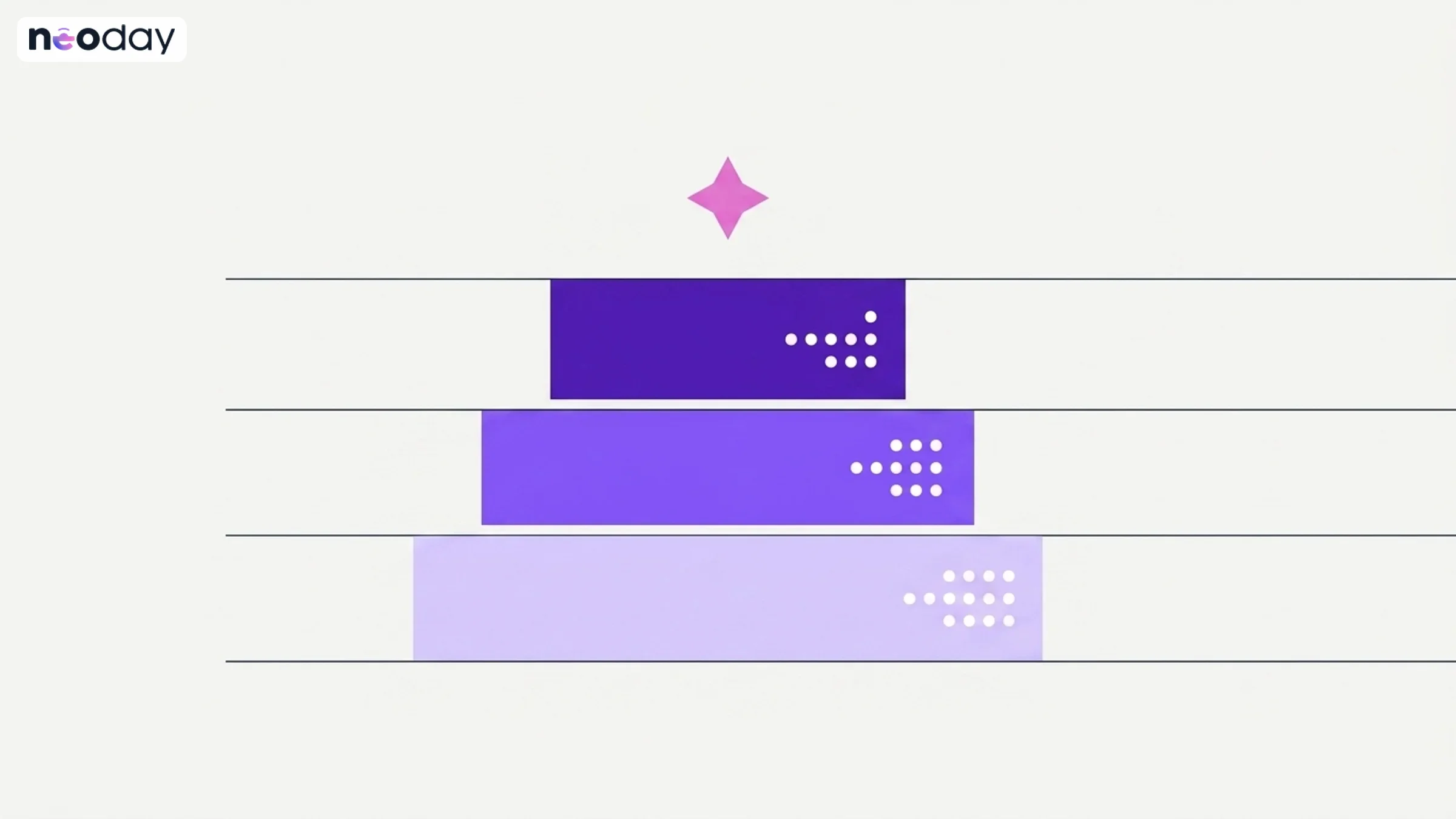
A tiered reward structure gives customers a visible path to better benefits, which reduces the likelihood they will switch to a competitor mid-journey.
Set up your technology stack
Your technology choices determine what is possible at every stage after launch. A loyalty program that lives in a spreadsheet will not scale. A bloated enterprise platform will slow you down and drain budget before you have proven the concept.
For most independent and mid-market retailers, a loyalty SaaS platform is the right starting point. These platforms handle point tracking, member profiles, reward issuance, and campaign management without requiring a development team. The key is choosing one that integrates with your existing point-of-sale system and e-commerce platform.
Evaluate platforms against these criteria:
Evaluation criterion | Why it matters |
|---|---|
POS and e-commerce integration | Members expect points to appear instantly, regardless of channel |
Mobile wallet and app support | Digital cards reduce friction and increase daily visibility |
Segmentation and campaign tools | You need to target the right members with the right message |
Analytics and reporting | Without data, you cannot optimize or justify the program's cost |
Coupon and voucher management | Targeted offers require flexible [coupon software](/neoday-loyalty/coupon-software/) |
Membership card issuance | Physical or digital [membership cards](/membership-card-software/) signal program credibility |
Scalability and pricing model | Transaction-based pricing can become expensive as volume grows |
If you are evaluating NeoDay as your platform, the NeoDay loyalty overview explains how the product handles each of these requirements for retail, restaurant, and membership businesses.
Design the member experience from enrollment to redemption
Technology is only half the equation. The experience a customer has from the moment they hear about your program to the moment they redeem their first reward determines whether they stay engaged or forget they ever signed up.
Enrollment should be frictionless. Ask for a name and email address at minimum. You can collect richer profile data over time through progressive profiling, a technique where you ask one additional question at each meaningful interaction rather than bombarding the customer at sign-up.
Onboarding matters more than most retailers expect. Send a welcome message within 24 hours that explains exactly how the program works, what the member just earned for joining (a welcome bonus accelerates first redemption), and what they need to do next. Members who redeem within the first 90 days retain at dramatically higher rates than those who do not.
Communication cadence is a balance. Too many emails and members unsubscribe. Too few and they forget about the program until the points expire. A monthly balance update, a triggered message when a member is close to a reward threshold, and a re-engagement campaign for members who have gone quiet for 60 days covers most of what you need.
Launch, measure, and iterate
A loyalty program is not a set-and-forget marketing asset. It requires the same ongoing attention as any other growth channel.
At launch, pick a small number of key performance indicators and measure them consistently. These typically include active member rate (what percentage of enrolled members transact at least once per quarter), redemption rate, average order value for members versus non-members, and churn rate for members versus non-members.
Run a 90-day post-launch review before making any structural changes. Small fluctuations in the first weeks often smooth out as the member base matures. If you change the point earn rate or the redemption threshold too quickly, you risk frustrating early adopters who enrolled under different expectations.
As the program matures, look for segmentation opportunities. Your top 20 percent of members by spend probably do not need a discount to return. They need recognition, early access, and communication that makes them feel like insiders. Treating all members identically is a wasted opportunity and a wasted budget.
For inspiration on how established retailers have solved these challenges, browse the loyalty program examples across various industries to see what structures and reward mechanics have worked in practice.
Common mistakes to avoid
Before launch, it is worth naming a few patterns that reliably cause programs to underperform.
Over-engineering the reward structure is common. Programs with five earn rates, three expiry rules, and two parallel currencies confuse members and overwhelm frontline staff. Start simple. You can add complexity once members understand the core mechanic.
Ignoring the frontline is equally damaging. Your cashiers and sales associates are the primary channel through which members hear about the program in-store. If they do not understand how it works or do not believe in its value, enrollment rates will be low and so will engagement.
Finally, avoid building a program that only rewards spend. Engagement-based earning, such as points for writing a review, sharing on social, or completing a product quiz, deepens the relationship and gives non-buyers a reason to interact with your brand between purchase occasions.
Sources: Bain and Company, "Prescription for Cutting Costs" (2001, updated 2022). Loyalty industry benchmarks sourced from Bond Brand Loyalty Report 2024. General retail frequency data from NielsenIQ Retail Measurement Services.
Frequently asked questions about building a retail loyalty program
What is a retail loyalty program? A retail loyalty program is a structured marketing system that rewards customers for repeat purchases or engagement, typically through points, stamps, tiers, or cashback, with the goal of increasing retention and lifetime value.
How much does it cost to build a retail loyalty program? Costs vary widely depending on the approach. A SaaS-based loyalty platform typically costs between 100 and 1,000 dollars per month for small to mid-size retailers. Enterprise custom builds can run into six figures. Most retailers start with a SaaS platform to validate the concept before investing in custom development.
What is the best loyalty program structure for a small retailer? A stamp card or simple points program is usually the best starting point for small retailers. Both are easy for customers to understand, require minimal technology, and can be launched quickly. As the customer base grows, you can introduce tiers or paid membership options.
How do you measure the success of a retail loyalty program? The most reliable metrics are active member rate, redemption rate, average order value for members versus non-members, and member retention rate compared to non-members. Tracking these four consistently gives you enough signal to optimize without overwhelming your team with data.
How long does it take to launch a retail loyalty program? With a SaaS platform and an existing POS integration, a basic retail loyalty program can go live in two to four weeks. More complex programs involving custom app development, physical card issuance, or multi-location rollouts typically take three to six months.
Should a retail loyalty program be free or paid to join? Free programs maximize enrollment and lower the barrier to first engagement, which works well when your goal is building a large member database. Paid programs (like Amazon Prime) generate upfront revenue and attract highly committed customers, but they require a clearly communicated value proposition to convert sign-ups.
How do you prevent loyalty program fraud? Common fraud prevention measures include linking point earning to verified transactions rather than manual entry, setting minimum spend thresholds before redemption, monitoring for unusual redemption patterns, and requiring account verification via email or phone number before issuing high-value rewards.
What technology do you need to run a retail loyalty program? At minimum, you need a point tracking system, a member database, and a way to issue and redeem rewards at the point of sale. Most retailers use a dedicated loyalty platform that integrates with their existing POS and e-commerce systems, along with email or SMS tools for member communication.