
Blog
Product Updates
Restaurant loyalty program ideas: 12 tactics that boost return visits

Ronald Meeuwissen

Running a restaurant today means competing not just on food quality, but on how well you keep guests coming back. The right restaurant loyalty program ideas can be the difference between a one-time visitor and a guest who books a table every month. This guide walks through 12 concrete tactics, explains why each one works, and shows you how to combine them into a system that actually drives return visits.
Why most restaurant loyalty programs underperform
Many operators launch a loyalty program, hand out stamp cards, and then wonder why redemption rates stay flat. The problem is rarely the reward itself. It is usually a mismatch between what the program offers and what guests actually value.
Guests at a fast-casual lunch spot want speed and convenience. Guests at a fine-dining restaurant want recognition and exclusivity. A single punch-card structure cannot serve both. Before you choose any tactic, you need a clear picture of your customer segments and what motivates each one.
Customer retention is also far cheaper than acquisition. Research consistently shows that increasing retention by five percent can lift profits by 25 to 95 percent. A loyalty program is one of the most direct levers you have for moving that number. If you want a deeper grounding in the economics, this primer on customer retention is a useful starting point.
The 12 restaurant loyalty program ideas
1. Points-per-visit over points-per-spend
Points tied to spend reward your highest spenders but ignore the guest who visits three times a week for a small coffee. A visit-based points model rewards frequency instead of transaction size, which is often a better fit for quick-service and café concepts.
The psychological effect is straightforward: guests feel rewarded for showing up, not for spending more. That lowers the barrier to earning and makes the program feel fair.
2. Tiered membership levels
Tiered loyalty programs create a visible status ladder that motivates guests to climb. A guest who reaches Gold status is far less likely to defect to a competitor because they would lose accumulated status, not just points.
Tiers also let you differentiate rewards without inflating cost. Bronze members get a free birthday dessert. Gold members get priority reservations and a quarterly tasting event invite. The top tier feels exclusive without being expensive to run.
If you want to explore how membership structures work in practice, NeoDay's membership card software gives you a flexible framework for setting up and managing tiers digitally.
3. Surprise-and-delight moments
Predictable rewards are fine. Unexpected ones create emotional moments that guests talk about. A surprise free appetizer on a guest's fifth visit, or a handwritten note from the chef for a loyal regular, creates a story worth sharing.
Surprise-and-delight tactics work because they trigger reciprocity. When someone receives an unexpected gift, they feel a natural impulse to give something back, usually in the form of a repeat visit or a recommendation to a friend.
4. Time-limited bonus point events
Double-points Tuesdays or bonus points during the afternoon lull are classic tools for managing table utilisation. They reward guests for visiting at off-peak times, which smooths out revenue without discounting your peak periods.
The key is making the event feel like an exclusive insider offer rather than a desperate attempt to fill seats. Frame it as "member hours" and communicate it only through your loyalty channel.
5. Referral rewards built into the program
Word-of-mouth is your cheapest acquisition channel, but most restaurants leave it unstructured. A referral reward built into your loyalty program gives existing members a concrete reason to bring a friend and gives the new guest an immediate reason to sign up.
A simple structure: the referring member earns 200 bonus points when a referred friend completes their first visit. The new guest earns 100 points on sign-up. Both parties win, and you acquire a new member at a fraction of the cost of paid advertising.
6. Birthday and anniversary rewards
Personalised rewards tied to life moments have some of the highest redemption rates in the industry. A birthday reward that expires within 30 days of the guest's birthday creates urgency without feeling transactional.
Anniversary rewards, tied to the date the guest joined your program, are underused. They reinforce the relationship between the guest and your brand and give you a reliable annual touchpoint for re-engagement.
7. Digital coupon campaigns for lapsed guests
Every loyalty program has a segment of members who signed up and then went quiet. A targeted digital coupon sent to guests who have not visited in 60 or 90 days can reactivate a meaningful percentage of them at low cost.
The coupon should be specific, not generic. "15% off your next pasta dish" outperforms "15% off your next visit" because it signals that you know what the guest orders. Personalisation lifts redemption rates significantly.
NeoDay's coupon software is built for exactly this kind of targeted, time-sensitive campaign and integrates directly with your loyalty member data.
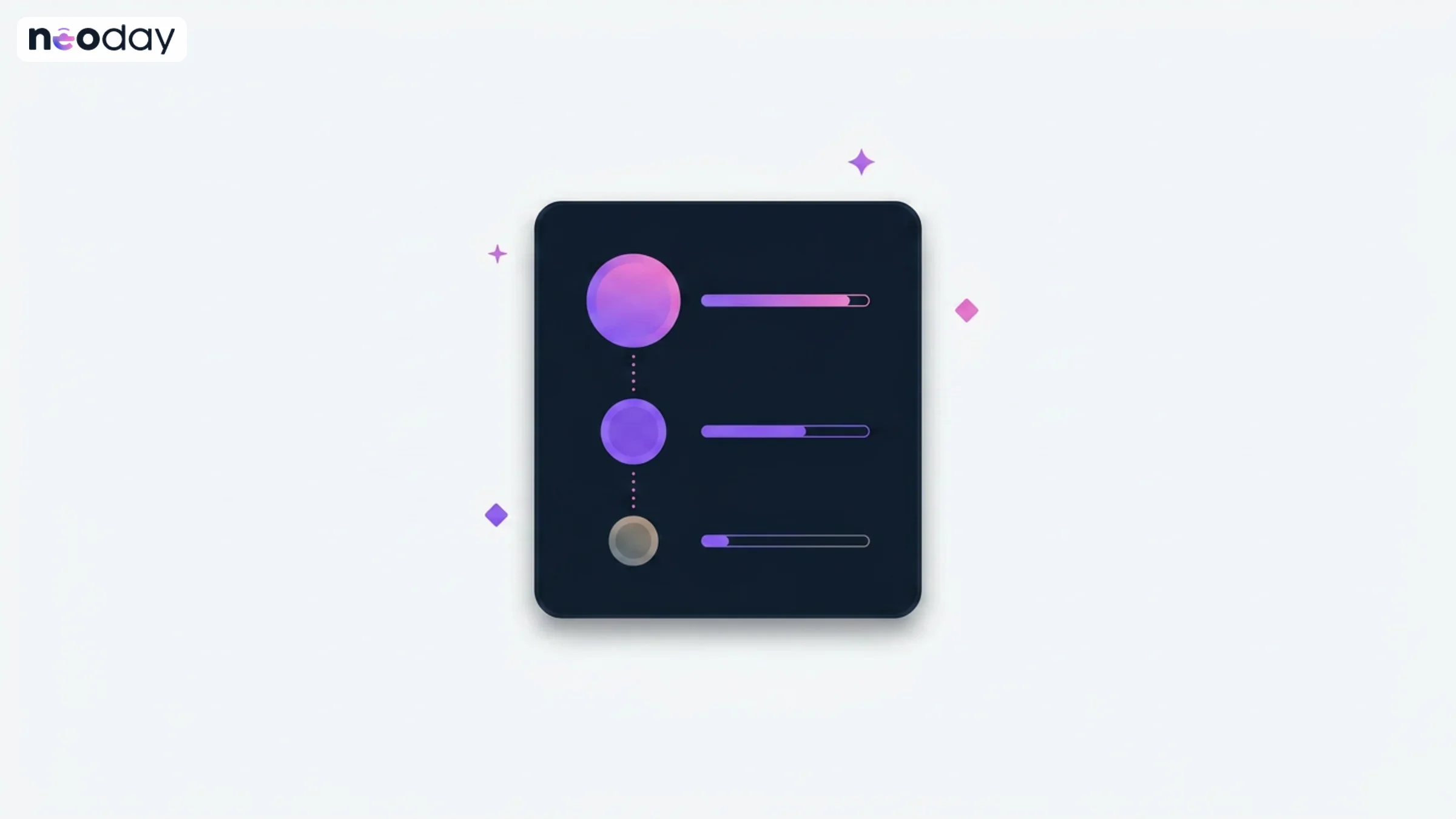
A tiered rewards dashboard lets restaurant operators visualise member distribution across Bronze, Silver, and Gold levels to inform targeted campaign decisions.
8. Menu-unlock rewards
Instead of discounts, offer access. A menu-unlock reward gives loyal members the ability to order a dish or drink that is not on the public menu. This could be a chef's test recipe, a seasonal cocktail, or a limited-batch dessert.
This tactic is powerful because it does not erode your margins the way discounting does. It creates perceived value through exclusivity rather than price reduction. Guests feel like insiders, which deepens their emotional connection to your brand.
9. Coalition loyalty with complementary businesses
Coalition loyalty programs let members earn points across multiple businesses, typically non-competing ones. A restaurant could partner with a nearby cinema, a parking provider, or a grocery retailer so that members earn restaurant points when they shop at a partner location.
The main benefit is exposure. Your loyalty program reaches the partner's customer base without you spending on advertising. The main risk is complexity, so keep the coalition small and the rules simple at the start.
10. Feedback loops that reward participation
Guests who leave a review, complete a post-visit survey, or engage with a new menu item on your app can earn bonus points for doing so. This turns passive customers into active contributors and gives you operational data you can act on.
The data collected through feedback loops is also valuable for personalisation. A guest who consistently rates fish dishes highly should receive communications about your new seafood menu, not your new burger special.
11. Gamification elements
Gamification in loyalty programs means adding game-like mechanics: progress bars, badges, challenges, and leaderboards. A "visit five different menu categories" challenge, for example, encourages exploration and increases average order variety.
The goal is to make participation feel playful rather than transactional. Progress bars showing how close a member is to the next reward have been shown to increase visit frequency in the period just before the reward threshold.
12. Charitable giving as a reward option
Not every guest wants a free dessert. Some would rather donate their points to a cause the restaurant supports. Offering a points-to-charity option appeals to values-driven guests and reinforces your brand's social positioning.
This tactic also reduces your liability for unredeemed points while building goodwill. It is worth piloting with a local cause that resonates with your specific community rather than a global charity that feels impersonal.
How to choose the right mix of tactics
No single tactic works for every restaurant. The right combination depends on your concept, average check size, visit frequency, and the demographics of your core guests.
The table below offers a starting framework for matching tactics to restaurant types.
Restaurant type | High-impact tactics | Tactics to use carefully |
|---|---|---|
Quick-service / fast casual | Visit-based points, time-limited bonus events, referral rewards | Menu-unlock rewards (low margin items) |
Casual dining | Tiered membership, birthday rewards, gamification | Coalition loyalty (complexity risk) |
Fine dining | Surprise-and-delight, menu-unlock rewards, tiered tiers | Points-per-visit (low frequency) |
Café / coffee | Visit-based points, gamification, feedback loops | Charitable giving (lower spend per visit) |
Multi-location chain | Digital coupons for lapsed guests, tiered membership, referral rewards | Surprise-and-delight (hard to scale) |
Start with two or three tactics that align tightly with your concept and your guests' primary motivation. Measure redemption rates, visit frequency changes, and average spend per member visit. Then layer in additional tactics once you have a baseline.
Measuring what actually matters
A loyalty program generates data. The question is which data you act on. The metrics below are the ones that tell you whether your program is changing behaviour, not just tracking it.
Metric | What it measures | Benchmark to aim for |
|---|---|---|
Redemption rate | Percentage of earned rewards that are used | 40-60% is healthy for most programs |
Visit frequency uplift | Change in average visits per member vs non-member | Members should visit 20-40% more often |
Member spend per visit | Average check for loyalty members vs non-members | Members typically spend 12-18% more |
Reactivation rate | Percentage of lapsed members who return after a campaign | 10-20% is a strong result |
Referral conversion | New members acquired through referral as % of total new members | Aim for 15% or more over time |
Churn rate | Percentage of members who go 90+ days without a visit | Below 20% annually is a good target |
If your redemption rate is below 30%, the rewards are probably too hard to earn or too irrelevant to motivate action. If your visit frequency uplift is flat, the program is not changing behaviour and you need to revisit your trigger points.
Building on a platform that supports growth
The tactics above are only as effective as the infrastructure behind them. A paper stamp card cannot run a birthday campaign, a reactivation flow, or a referral program. You need a platform that connects your member database, your POS data, and your communication channels.
NeoDay's loyalty platform is built for exactly this kind of multi-tactic program. It gives restaurant operators the tools to set up points structures, tiers, coupons, and automated campaigns without needing a development team.
If you want to see how other operators have structured their programs, the best restaurant loyalty program examples post covers real-world cases across different restaurant types. And if you are curious how these ideas translate to other sectors, loyalty program examples across various industries gives you a broader perspective.
The best restaurant loyalty programs are not the most complicated ones. They are the ones that are easy for guests to understand, easy for staff to explain, and easy for operators to manage. Pick the right tactics, measure the right metrics, and iterate.
Sources: Bain & Company, "Prescription for Cutting Costs" (customer retention economics); Colloquy Loyalty Census; Bond Brand Loyalty Report 2024; Harvard Business Review, "The Value of Keeping the Right Customers."
FAQ: Restaurant loyalty program ideas
What is the most effective restaurant loyalty program idea for increasing visit frequency? Visit-based points programs are among the most effective for increasing frequency because they reward guests for showing up rather than spending a minimum amount, which lowers the barrier to earning and reinforces the habit of returning.
How many tactics should a restaurant loyalty program include at launch? Two to three well-executed tactics are more effective at launch than six poorly integrated ones. Start with a core earning structure, one retention tactic such as birthday rewards, and one reactivation mechanic such as lapsed-guest coupons, then add more once you have baseline data.
What reward type has the highest redemption rate in restaurant loyalty programs? Birthday and anniversary rewards consistently achieve the highest redemption rates, often between 60 and 80 percent, because they are personally relevant and time-limited, which creates both motivation and urgency.
How do tiered restaurant loyalty programs reduce churn? Tiered programs reduce churn because members who have reached a higher status level face a real cost when switching to a competitor: they lose the accumulated status they cannot transfer. This switching cost makes defection psychologically and practically more expensive.
Can small or independent restaurants run effective loyalty programs? Yes. Digital loyalty platforms have made sophisticated programs accessible to single-location operators. A small restaurant can run a points program, automated birthday campaigns, and lapsed-guest reactivation flows without a large technology budget or a dedicated marketing team.
What is the difference between a points program and a tiered membership program? A points program rewards individual transactions by accumulating currency redeemable for future benefits. A tiered membership program classifies guests into status levels based on cumulative activity, unlocking different benefits at each level. Many effective programs combine both: guests earn points and also progress through tiers as their engagement grows.
How should restaurants measure the success of a loyalty program? The primary metrics are redemption rate, visit frequency uplift among members compared to non-members, member spend per visit, and reactivation rate for lapsed members. A program that does not move visit frequency or spend per visit is tracking behaviour without changing it.
What role does personalisation play in restaurant loyalty program ideas? Personalisation is what separates programs guests engage with from ones they ignore. Using order history and visit data to send relevant offers, such as a promotion on a dish a guest orders regularly, reliably outperforms generic communications in both open rates and redemption.