
Blog
Product Updates
Short-term loyalty campaigns: the 10-week framework

Ronald Meeuwissen

Most retailers treat loyalty as a long game, and rightly so. But short-term loyalty campaigns have their own distinct power: they create urgency, drive repeat visits within a defined window, and generate measurable ROI fast. The problem is that most businesses run them without structure, turning a promising campaign into a string of disconnected promotions that leave customers confused and margins thin.
This post walks through the 10-week framework that high-performing retail, restaurant, and membership businesses use to plan, execute, and close short-term loyalty campaigns in a way that actually builds lasting customer behavior.
Why short-term loyalty campaigns work differently than always-on programs
Always-on loyalty programs are designed for depth: they reward cumulative behavior over months or years. Short-term campaigns are designed for intensity. They compress the reward cycle, raise the perceived stakes, and give customers a reason to act now rather than eventually.
The psychology is straightforward. A customer who knows a reward is available indefinitely will delay. A customer who knows a campaign ends in six weeks will not. This is why time-boxed campaigns often outperform permanent point schemes in short-run metrics like weekly visit frequency and average basket size.
But intensity without structure creates problems. Without a clear arc, campaigns peak early, fizzle in the middle, and end with a whimper. The 10-week framework solves this by dividing the campaign into three distinct phases: foundation (weeks 1 to 2), activation (weeks 3 to 8), and close (weeks 9 to 10).
Phase 1: Foundation (weeks 1 to 2)
Define the campaign mechanic before anything else
The first decision is the reward mechanic. This is not a branding question. It is a behavioral question: what specific action do you want customers to take more often, and what reward will motivate that action reliably?
Common mechanics for short-term loyalty campaigns include stamp cards, tiered spend challenges, bonus point multipliers, and referral bursts. Each has a different behavioral profile. Stamp cards drive frequency. Spend challenges drive basket size. Multipliers drive engagement from already-active customers. Referral bursts drive acquisition.
Choose one primary mechanic. Combining two or more in a single campaign dilutes the signal and makes it harder to measure what worked.
Set a campaign goal that is measurable within the window
A goal like "increase loyalty" is not measurable in 10 weeks. Goals like "increase weekly visit frequency among enrolled members by 20%" or "grow enrolled member count by 15% before close" are. Every downstream decision, from the reward value to the communication cadence, flows from this number.
Document the baseline before the campaign launches. Pull average visit frequency, average transaction value, and current enrolled member count. Without a baseline, you cannot calculate lift.
Build or configure your enrollment flow
Short-term campaigns work best when enrollment is frictionless. If customers need to fill out a lengthy form or wait for a physical card, a meaningful share of interested people will drop off before they ever earn their first reward.
Digital enrollment through a QR code at point of sale or a link in an email converts far better than paper-based processes. If your business already runs a loyalty program, this phase is about segmenting your existing member base and deciding whether the campaign is open to all members or targeted at a specific cohort.
Phase 2: Activation (weeks 3 to 8)
This is the longest phase and the one most campaigns get wrong. Six weeks feels like plenty of time, so the temptation is to front-load communications and then go quiet. The better approach is a structured cadence with three beats: launch, mid-campaign push, and re-engagement.
Week 3: Launch with a strong opening incentive
The opening week should feel like an event. Offer a double-stamp day, a bonus point weekend, or an enrollment reward that is only available in the first seven days. This creates an immediate reason to join and an immediate reason to transact.
Promote through every channel you own: email, SMS, in-store signage, and any app push notifications your platform supports. The opening week sets the enrollment baseline that determines whether the rest of the campaign has enough participants to be statistically meaningful.
Weeks 4 to 6: Sustain engagement with progress signals
Progress visibility is one of the most underused tools in short-term campaign design. When customers can see how close they are to a reward, they are significantly more likely to make an additional visit to close the gap. This is the endowed progress effect in practice.
Configure your platform to send progress updates at meaningful milestones. A message that says "You have 2 stamps left to earn your reward" converts better than a generic "Don't forget about our loyalty campaign" reminder. The specificity of the message is what makes it actionable.
For restaurants specifically, mid-campaign is also the right time to introduce a menu-tied bonus: extra stamps for a specific item category, for example. This drives trial of higher-margin items while keeping the campaign mechanic intact. If you want to see how other restaurants handle this, the best restaurant loyalty program examples post covers several real-world approaches.
Weeks 7 to 8: Re-engage lapsed participants
By week seven, your data will show a clear split: active participants who are on track to earn a reward, and lapsed participants who enrolled but have not transacted in two or more weeks. These two groups need completely different messages.
Active participants need a push toward completion. Lapsed participants need a reason to return. A reactivation offer, such as a bonus stamp for their next visit this week, can recover a meaningful share of lapsed members before the close phase begins.
This is also the point at which coupon mechanics often play a supporting role. A time-limited discount coupon sent to lapsed members creates urgency without requiring a permanent change to your pricing. Coupon software integrated into your loyalty platform makes this easy to execute at scale without manual work per customer.
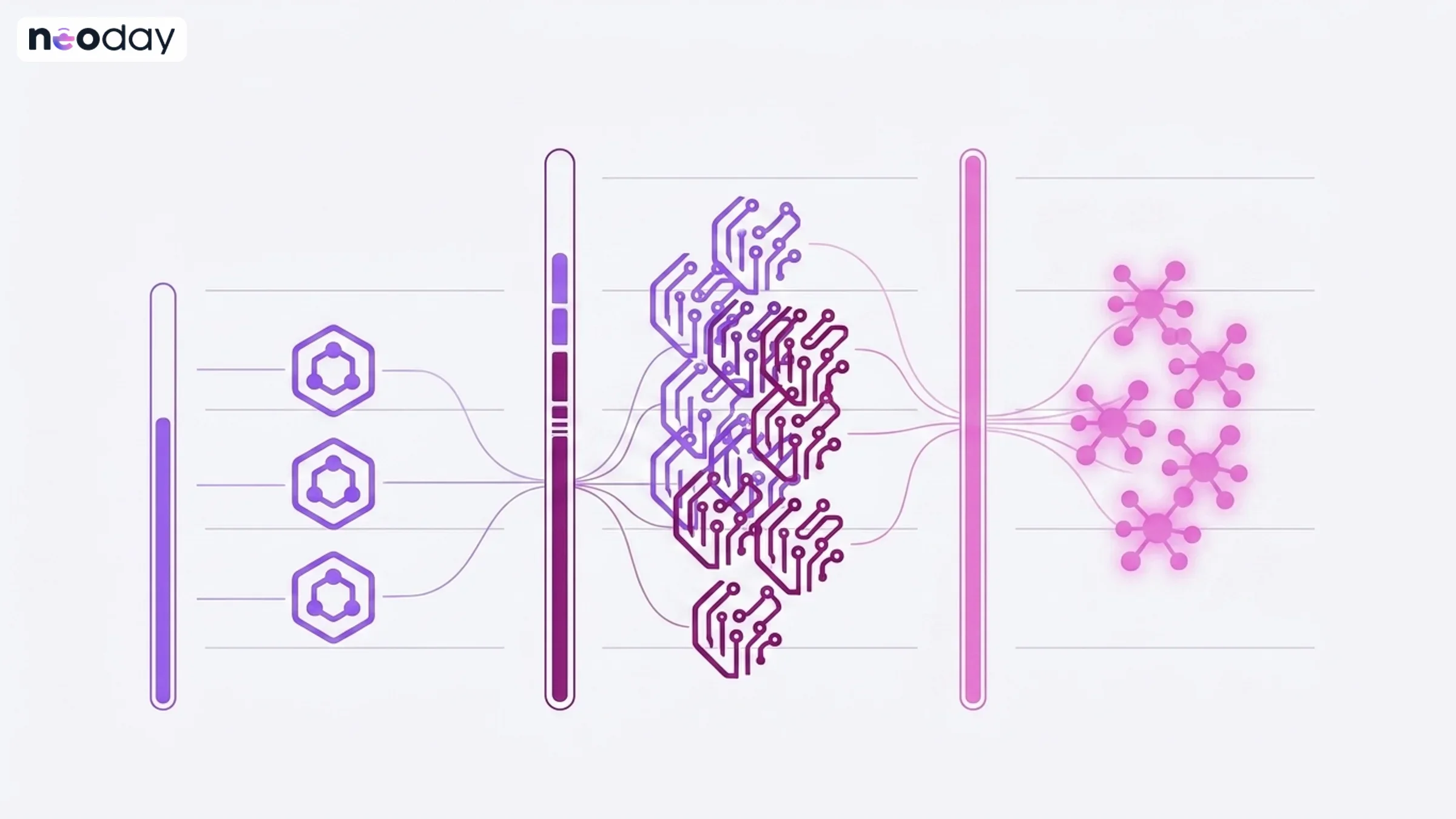
The three-phase structure prevents the mid-campaign energy drop that derails most short-term loyalty campaigns.
Phase 3: Close (weeks 9 to 10)
Create genuine urgency without gimmicks
The close phase is where many campaigns either recover or collapse. Urgency messaging only works if the deadline is real and the reward is worth the effort. If customers sense the campaign will just roll into another identical promotion, the urgency disappears.
Communicate the end date clearly and repeatedly. "Only 10 days left to earn your reward" is more effective than a vague "Campaign ending soon" message. Pair this with a countdown in your app or member portal if your platform supports it.
For membership-based businesses, the close phase is also a natural moment to upsell. A customer who has been actively participating in your short-term campaign is warm, engaged, and already sold on the value of your program. This is a far better moment to present a premium membership tier than a cold outreach to a non-participant. Businesses running membership card software can automate this upsell flow based on campaign participation data.
Week 10: Capture and convert
The final week has two jobs. The first is to close out reward redemptions cleanly, ensuring customers who earned rewards can actually use them before the window closes. The second is to capture data and transition participants into your ongoing program.
A customer who completes a short-term campaign and earns a reward is in a high-trust moment. Use it. A post-campaign enrollment message, "You have earned your reward. Want to keep earning with our year-round program?", converts at a meaningfully higher rate than a cold loyalty program invitation.
Measuring short-term loyalty campaign performance
The table below shows the core metrics to track across each phase of the campaign, along with the calculation method and the decision each metric informs.
Metric | Calculation | Decision it informs |
|---|---|---|
Enrollment rate | New enrollees / total customers exposed | Whether the offer is compelling enough to join |
Active participation rate | Members with 1+ transactions in past 14 days / total enrollees | Whether mid-campaign re-engagement is needed |
Redemption rate | Rewards redeemed / rewards earned | Whether the reward is perceived as valuable |
Incremental visit frequency | Average weekly visits during campaign / average weekly visits in prior period | Whether the campaign is driving new behavior |
Lapsed member recovery rate | Reactivated lapsed members / total lapsed members contacted | Whether reactivation messaging is working |
Post-campaign retention | Members still active 4 weeks after close / total campaign completers | Whether the campaign is building lasting loyalty |
Track these weekly, not just at campaign end. Waiting until week 10 to look at participation rate means you have no time to intervene if numbers are soft.
Common structural mistakes in short-term loyalty campaigns
The table below maps the most common campaign design errors to their downstream effects and the structural fix that prevents them.
Mistake | Effect | Fix |
|---|---|---|
No baseline data before launch | Cannot calculate true lift | Pull 8-week pre-campaign data before week 1 |
Too many mechanics in one campaign | Customer confusion, diluted results | Choose one primary mechanic per campaign |
Flat communication cadence | Mid-campaign drop-off | Use the launch / progress / reactivation beat structure |
Reward value too low | Low redemption, low perceived program value | Test reward value against margin impact before launch |
No post-campaign transition plan | Earned goodwill evaporates | Build the ongoing program invitation into the close sequence |
Campaign runs independently of main program | Data siloed, no cumulative member profile | Integrate campaign data into your core loyalty platform |
The last point is worth expanding. Short-term campaigns that run on separate tools or spreadsheets create data silos. The transaction and behavioral data from the campaign has real value for your ongoing program, but only if it flows into a unified member profile. This is one of the core arguments for running short-term campaigns inside your existing loyalty platform rather than bolting on a separate tool.
For a broader look at how retention connects to these mechanics, the customer retention explainer covers the foundational concepts in more depth.
How the framework adapts across retail, restaurant, and membership contexts
The 10-week structure is not one-size-fits-all in its specifics, even though the phases are consistent. Retail businesses tend to anchor campaigns to a selling season or product launch. Restaurants anchor to visit frequency with lower transaction thresholds. Membership businesses anchor to renewal cycles or tier advancement.
In retail, the activation phase often benefits from product-category bonuses: extra points on a specific department for two weeks, for example. This drives trial of new categories while keeping the campaign budget focused. The best retail loyalty program examples post includes several category-bonus case studies worth reviewing before campaign design.
In restaurant contexts, the mechanic is almost always frequency-based because the average transaction value is lower and visit frequency is the primary lever. In membership businesses, the close phase often doubles as a renewal or upgrade prompt, making the post-campaign transition especially important to plan carefully.
Across all three contexts, the principle is the same: short-term loyalty campaigns should leave a structural residue. Participants should exit the campaign more engaged with your program than when they entered it, not simply rewarded and then forgotten.
Sources
Behavioral economics research on the endowed progress effect: Nunes, J.C. and Dreze, X. (2006). "The Endowed Progress Effect: How Artificial Advancement Increases Effort." Journal of Consumer Research, 32(4), 504-512. Retail loyalty program performance benchmarks: Loyalty One, Bond Brand Loyalty Report 2024. Campaign structure and phasing principles: NeoDay internal campaign data and customer case studies, 2024-2025.
FAQ: short-term loyalty campaigns
What is a short-term loyalty campaign? A short-term loyalty campaign is a time-limited promotional program, typically running between 4 and 12 weeks, designed to drive specific customer behaviors such as increased visit frequency or higher average spend within a defined window. Unlike always-on programs, they use urgency and a clear end date to accelerate action.
How long should a short-term loyalty campaign run? Most short-term loyalty campaigns perform best between 6 and 12 weeks. Campaigns shorter than 4 weeks rarely give customers enough time to complete the reward cycle. Campaigns longer than 12 weeks begin to lose the urgency effect that makes them effective.
What metrics should I track for a short-term loyalty campaign? The core metrics are enrollment rate, active participation rate, redemption rate, incremental visit frequency, lapsed member recovery rate, and post-campaign retention. Track these on a weekly basis throughout the campaign rather than waiting until the end.
What reward mechanic works best for short-term loyalty campaigns? The best mechanic depends on your goal. Stamp cards drive visit frequency. Spend challenges drive basket size. Bonus point multipliers reactivate existing members. Choose one primary mechanic per campaign and measure its effect cleanly before testing a second.
How do I prevent a mid-campaign drop-off in participation? Use a structured communication cadence with three beats: a strong launch offer, progress-based update messages in the middle weeks, and a reactivation message targeting lapsed participants in weeks 7 to 8. Progress messages that show customers how close they are to a reward are particularly effective at sustaining engagement.
Can short-term loyalty campaigns work for restaurant businesses? Yes. Restaurants are well-suited to short-term loyalty campaigns because visit frequency is the primary behavioral lever and the reward cycle can be completed within a few weeks. Stamp-based mechanics with low thresholds, such as earning a reward after 5 visits, work especially well in restaurant contexts.
How do I transition customers from a short-term campaign into my ongoing loyalty program? Build the transition into the close phase of the campaign rather than treating it as an afterthought. A post-campaign enrollment message sent to customers who completed the reward cycle converts at a much higher rate than a cold invitation. Frame it as a continuation of the value they already experienced.
Should short-term campaigns run on a separate platform from my main loyalty program? No. Running campaigns on separate tools creates data silos and prevents you from building a unified member profile. Short-term campaigns should integrate with your core loyalty platform so that transaction and behavioral data from the campaign informs your ongoing program and segmentation.